
Morning light glances off a glassy cove in Cape Breton, Canada, as a young boy steadies himself on the deck of his family’s sailboat. The tide is gentle, the air sharp with the scent of pine, and the only sound is the slow flap of canvas overhead.
For marine biologist John Burt, those early years in Canada’s Nova Scotia mark the beginning of everything. “Growing up in that landscape gave me a sense of connection to nature that never left,” he says. “I knew early on that the ocean would shape my future.”
Forming an early bond with the ocean
Much of that connection traces back to a decision his father made when Burt was barely four years old. “In retrospect, it was probably a very poor decision,” he says, laughing. “He bought a sailboat, and every year on the last day of school, we would step onto it, shove off, and be gone for two months. We only really came back the weekend before school started.”
Summers drifting along the North Atlantic coast blurred into winters spent camping in the forest. “My father was very outdoorsy, and that gave me an appreciation for the environment broadly, but specifically for the ocean,” he says. “When you are in intimate contact with the sea from the time you are a small child, you really get to appreciate marine systems.”
That early pull shaped his academic choices. Burt studied close to home at Cape Breton University before moving to Ontario for his master’s degree, where he began working on the Great Lakes of North America.
The shift from icy storms to tropical seas
“I remember being in the second semester of my final year, working on a boat in Lake Huron in November,” he says. “We have these horrific storms, and I was on the side of the vessel vomiting while being surrounded by ice and icicles. I decided right there that when I went to do my PhD, I was going to work on tropical systems.”
Burt completed his doctoral work at the University of Windsor, where he made the shift into tropical marine biology. His move to the United Arab Emirates in 2009 expanded that work further. The Arabian Gulf, the warmest sea on Earth, offered a “natural laboratory,” its corals, fish, mangroves, and seagrasses revealing how life thrives under extraordinary environmental conditions. Over the years, he has built a research program that spans coral genomics, physiology, ecosystem processes, and coastal change.
Establishing Mubadala Arabian Center for Climate and Environmental Sciences
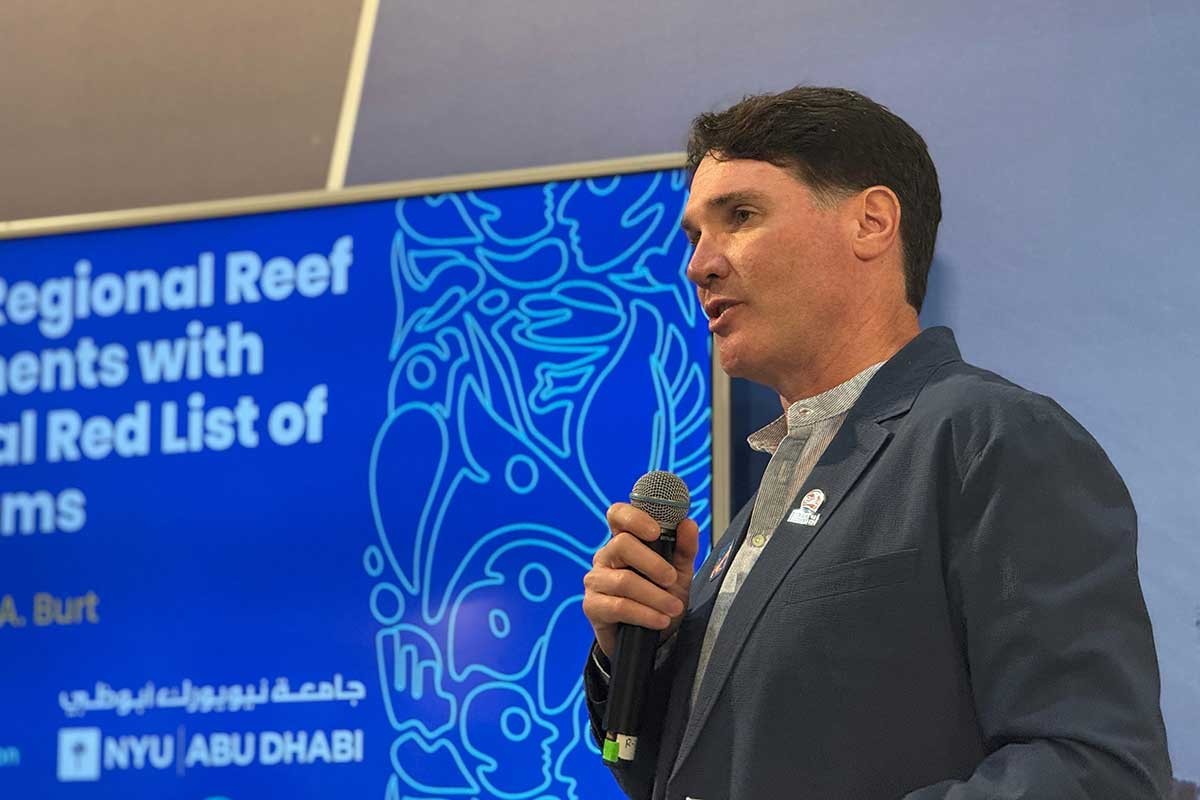
One of his proudest achievements is helping to establish the Mubadala Arabian Center for Climate and Environmental Sciences, known as ACCESS. The center brings together scientists studying climate, marine biology, and environmental change across the Emirates.
One of our big missions is not only to discover information about this region by setting up an observational network, but to make that data available to the public or to decision makers. Then we can use that real-world data to refine models and make them more accurate.
Emerging technologies now sit at the heart of that work. Burt’s team recently analyzed two decades of satellite imagery using machine learning to track coastal change across the Arabian Gulf. “We saw a 55 percent increase in the footprint of urban areas across the Gulf in the two decades we looked at,” he says. The results offer a detailed picture of regional transformation and generate the kind of environmental data needed to guide future planning.
Sharing data of the UAE’s biodiversity through open access
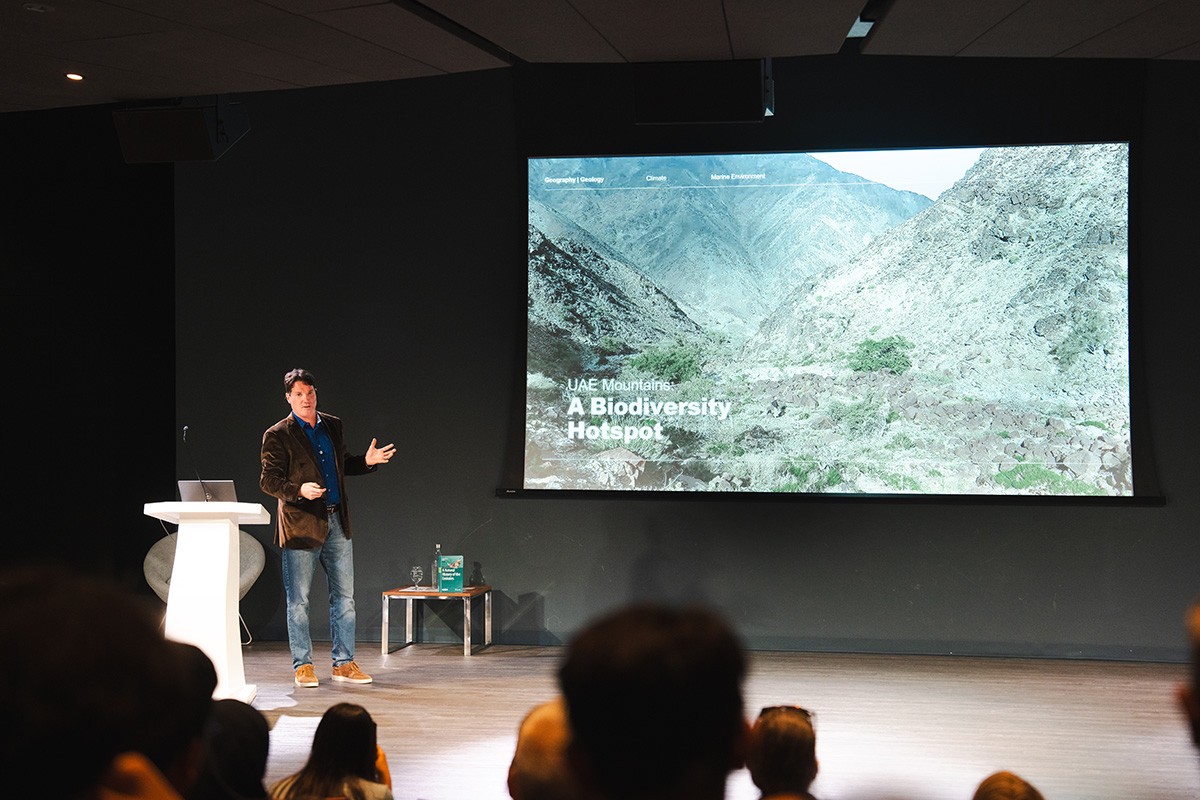
His commitment to public understanding is equally strong. A Natural History of the Emirates, published in 2023, began as a pandemic project while he was developing a course for NYU Abu Dhabi students. The result became a landmark open-access volume, drawing contributions from more than twenty specialists and featuring hundreds of photographs. Government partners supported the open-access fee, ensuring the work could be downloaded freely.
“There were over 430,000 downloads the last time I checked,” says Burt. “The people that use it range from consultants and government agencies to teachers and even grade-five students.”
Guiding research and stewardship across oceans
At NYU Abu Dhabi, where he is a professor of biology, Burt leads a team of researchers working across molecular biology, climate adaptation, and marine ecology. He also lends his expertise to government and industry partners, supporting policies that protect coastal and marine systems. As chair of the Mideast Coral Reef Society and a council member of the International Coral Reef Society, he plays a wider role in shaping conversations about coral reef futures across the tropics.

Looking ahead, his priorities include understanding how corals adapt to extreme heat, strengthening long-term environmental monitoring, and developing predictive tools to guide national policy. The next decade, he believes, is a chance to turn science into action.
“Our goal is to provide insight that helps chart a sustainable future,” he says. “That is what drives me.”