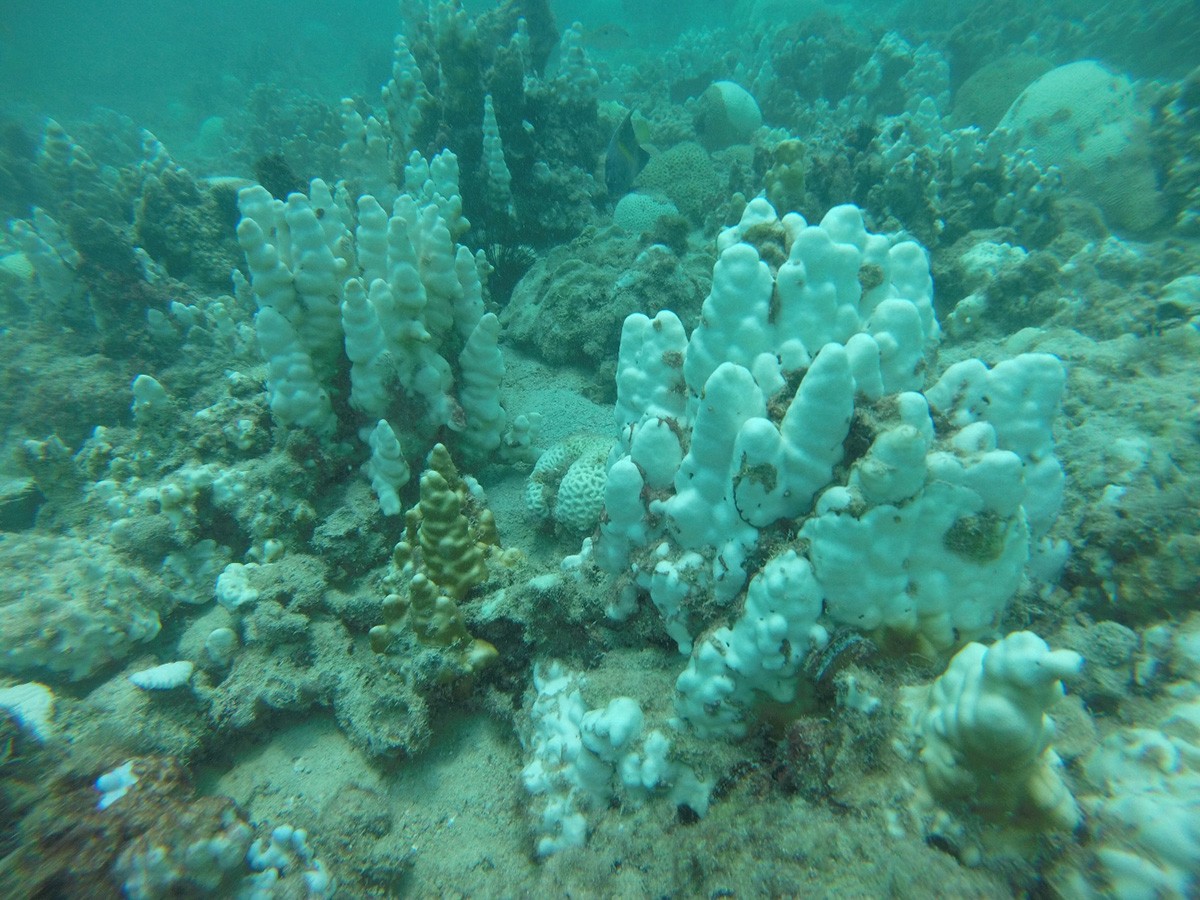
A team of scientists from NYU Abu Dhabi’s Mubadala Arabian Center for Climate and Environmental Sciences (Mubadala ACCESS), in partnership with Environment Agency - Abu Dhabi (EAD), Fujairah Environment Authority, RAK Environment and Protected Area Authority, and Sharjah’s Environment and Protected Area Authority, has completed a first-of-its-kind study on reefs across both coasts of the Emirates to measure how corals cope with extreme heat.
Using a pioneering tool known as the Coral Bleaching Automated Stress System (CBASS), researchers “stress tested” hundreds of coral colonies directly in the field. The rapid, 18-hour assay reveals each colony’s heat tolerance by gradually raising water temperatures and measuring the coral’s physiological performance.
This approach, which is quicker and more portable than traditional lab-based methods, allows the team to identify local reefs and individual corals that continue to function under extreme heat, a crucial step in building resilience into local restoration efforts.
The study, conducted under the auspices of government environmental agencies spanning the Emirates, surveyed reefs from western Abu Dhabi to Fujairah and included locally common species such as brain corals and knob corals. The results from this work can reveal significant differences in thermal tolerance between reefs, providing information that will help guide selective breeding and grow-out of corals for targeted restoration at a later date.
“These findings became the scientific foundation of our coral restoration programme, ensuring that propagation and transplantation focused on the most resilient species. By rebuilding reefs with heat-tolerant corals, the initiative not only restores structure and biodiversity but also strengthens the long-term resilience of Abu Dhabi’s coral ecosystems in the face of climate change.”
This work can support ambitious national marine conservation goals, including EAD’s target of restoring four million corals by 2030. By selecting and cultivating the most resilient corals, the UAE can enhance the long-term survival of its reefs in the face of increasingly frequent marine heatwaves.
Maitha Mohamed Al Hameli, Director of Marine Biodiversity Division at EAD said: “The Environment Agency – Abu Dhabi is committed to advancing science-based solutions that protect our most vital ecosystems. Our long-standing coral reef monitoring and survey programme has played a pivotal role in shaping restoration efforts. Through systematic surveys and thermal stress assessments, we have identified coral colonies in Abu Dhabi’s waters that exhibited remarkable thermal tolerance and resilience to bleaching events.
“This is a significant step towards ensuring the continued flourishing of our coral reefs and the biodiversity and coastal protection they provide.”
Mr. Abdul Aziz Al Suwaidi, Director of Marine Sustainability at the Environment and Protected Areas Authority in Sharjah, stated: “Coral reefs are the most biodiverse ecosystem in the UAE, and this research supports their continued resilience in the future.”
Next steps will involve genetics research to understand the drivers of differences in performance across reefs, with potential selective breeding and establishment of coral nurseries planned for the coming year. CBASS will remain a key tool in screening coral stocks for resilience before being relocated to local reefs to aid in restoration.