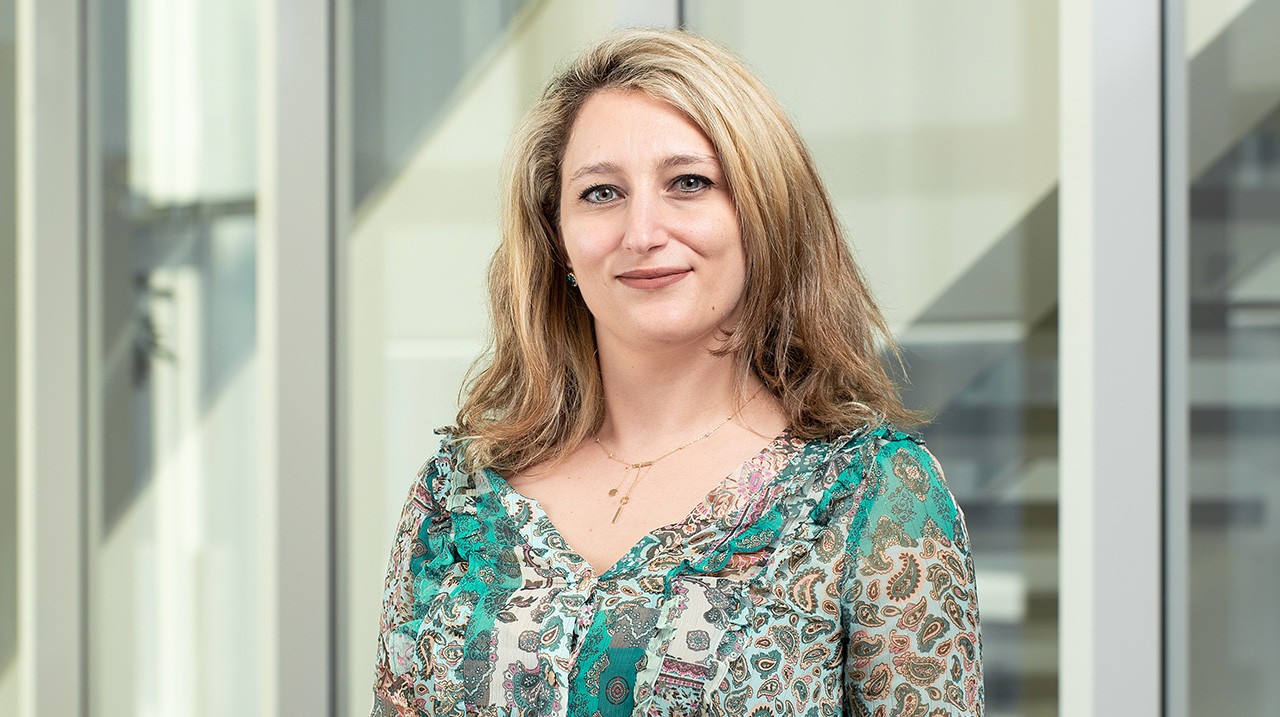
Anthony Tzes spends his days with machines built to go where humans cannot.
In his world, humanoid robots slip into burning buildings in search of survivors, drones skim debris from the ocean’s surface, and surgical robots move through the body with superhuman precision.
From childhood dreams of NASA to a lifetime in laboratories across three continents, the professor of electrical engineering at NYU Abu Dhabi is shaping a world where robots fold our laundry, clean impossible facades, and, one day, save lives in ways we cannot yet imagine.
“The question that drives everything we do is simple,” Tzes says. “How can we create machines that genuinely improve human life, whether that means reaching a patient on an operating table or a survivor trapped in rubble?”
An engineer’s journey
Tzes grew up in Greece with a fascination for how things work. After studying electrical and computer engineering at the University of Patras, he moved to the United States for doctoral work at Ohio State University, where he completed his PhD in 1990.
The same year, he joined Polytechnic University in New York, now known as the NYU Tandon School of Engineering, where he spent nearly a decade as a tenured associate professor exploring smart sensors and intelligent transportation systems.
His research attracted attention from NASA and the National Science Foundation. As director of the Instrumentation and Control Laboratory, Tzes worked on systems that could adapt and learn, laying the groundwork for the sophisticated robots he develops today. He also led the Urban Intelligent Transportation Systems Center in New York, investigating how networked technologies might transform city life.
In 1999, Tzes returned to Greece as a professor at his alma mater, leading the Applied Networked Mechatronics Systems group. His research expanded to include unmanned aerial vehicles, marine systems, and surgical robots.
Building something extraordinary
When Tzes arrived at NYUAD in 2017, he saw the potential to build something remarkable. After leading the robotics program and chairing the Electrical and Computer Engineering Department, he established the Center for AI and Robotics in 2021.
The center has since grown into one of the University’s largest research hubs, bringing together 21 team members. His 2025 appointment as the Alan Howard Distinguished Professor in Artificial Intelligence recognized both his research achievements and his success in building this collaborative community.
The work happening in his laboratories pushes boundaries in practical ways. One project involved testing an autonomous vessel in the NYUAD swimming pool to collect floating debris, a prototype for systems that could one day clean beaches and harbors with minimal human risk.
Another strand of research looks skyward. Tzes and his collaborators are developing robots capable of inspecting and cleaning large, slanted facades such as airport terminals, where traditional methods are dangerous and costly.
In parallel, his group is advancing humanoid robots trained to navigate cluttered environments and enter hazardous spaces, from burning buildings to damaged industrial sites. His work on surgical robots, meanwhile, makes complex procedures safer and more accessible.
“We’re not building robots for their own sake,” Tzes explains. “Every algorithm we develop, every system we test, exists to solve a real problem that affects real people.”
Machines that save lives
As the cost of humanoid robots falls from around $1.2 million to a few thousand dollars today, Tzes believes these machines are edging ever closer to being part of day-to-day life.
If prices drop below the $1,000 mark and battery life extends from roughly one hour toward a full working day, he predicts humanoid robots could begin to appear in homes and buildings within the next three to five years.
In that future, a domestic robot might cook, carry loads, or fold laundry. A building robot might patrol corridors at night or inspect hard-to-reach ducts, while airport facades, offshore platforms, and high-rise glass are serviced by specialized machines rather than crews suspended by ropes.
What begins in swimming pools and laboratories may soon save lives. A surgical platform refined in Abu Dhabi could be deployed in hospitals worldwide. A rescue robot tested on campus may one day pull survivors from earthquake rubble continents away. As machines take on routine and dangerous work, people are freed to focus on tasks that require human judgment and care.
“The ultimate measure of our success will not be how sophisticated our robots become,” Tzes reflects. “It will be whether they make life genuinely better for the people who need them most.”