

While many universities get ready to start their new term from mid to late January, the NYU Abu Dhabi campus has already come alive with J-Term courses taught by faculty that includes Nobel Laureate Ouided Bouchamaoui.
This compulsory, ten-day academic program is one of the defining features of the NYUAD undergraduate curriculum that reflects the University’s distinctive philosophy of immersive, experiential, and globally connected learning.
J-Term here is not an add-on or a short-term excursion, but a required academic experience designed to intensify focus, encourage collaboration, and push learning beyond traditional classroom boundaries. Students and faculty work together to grapple with real-world challenges, drawing on lived experience, local context, and global expertise to arrive at shared understanding.
Local Knowledge, Deeply Rooted

Some of the J-Term courses draw directly on the UAE context, offering our students, especially Emirati students, the opportunity to study the country they call home with a fresh academic perspective.
- Beyond Bigness: The Everyday City
Professor Khaled Alawadi
This course invites students to critically examine urban development in the UAE. The course contrasts pre-1990s neighborhoods that are known for density, simplicity, and social cohesion, with contemporary large-scale developments. Students investigate what makes cities livable, neighborly, and human-scaled, grounding urban theory in the realities of the region.
- Dressing the Nation
Lecturer of Engineering Design, Khulood Alawadi
Students examine how the Emirati national dress reflects identity, belonging, power, and social change. The course explores how clothing traditions emerge, become standardized, and adapt to shifting urban, environmental, and social conditions, while uncovering the cultural and symbolic significance of the crafts that underpin the attire.
For Emirati students, these courses offer a powerful opportunity to deepen their understanding of the UAE, while contributing their lived experiences to classroom dialogue.
Understanding a Complex World with Distinguished Practitioners
NYUAD’s J-Term also connects students to pressing global issues through courses led by distinguished policymakers, practitioners, and thought leaders.
- Contemporary Geopolitics: From a Practitioner’s View
Professor at Paris School of International Affairs and former President of UN General Assembly, Vuk Jeremić; Senior Advisor of Eurasia Group, Strahinja Matejic
Moving beyond the study of diplomacy, students actively practice it through simulations, policy writing, and negotiation. The course includes an authentic UN Secretary-General election simulation with peers from the Anwar Gargash Diplomatic Academy, as well as UAE-based field experiences connecting global power dynamics to lived political realities.
- Behind the Nobel Peace Prize: First-Hand Explorations of Conflict Resolution
Nobel Laureate, Ouided Bouchamaoui; Visiting Assistant Professor Daungyewa Utarasint
Guided by Nobel Peace Prize Laureate Ouided Bouchamaoui, students engage directly with the realities of peacebuilding and conflict mediation. Through discussion, role-playing, and mediation exercises, the course explores how societies transition from conflict to coexistence while developing practical skills in dialogue, deep listening, and storytelling.
Experiential, Place-Based Learning
J-Term’s experiential, place-based courses highlight the University’s distinctive approach to global education of learning that is grounded, engaged, and impactful.
- The Mindful Brain: Current Neuroscience and Ancient Wisdom
Professor of Psychology, David Melcher
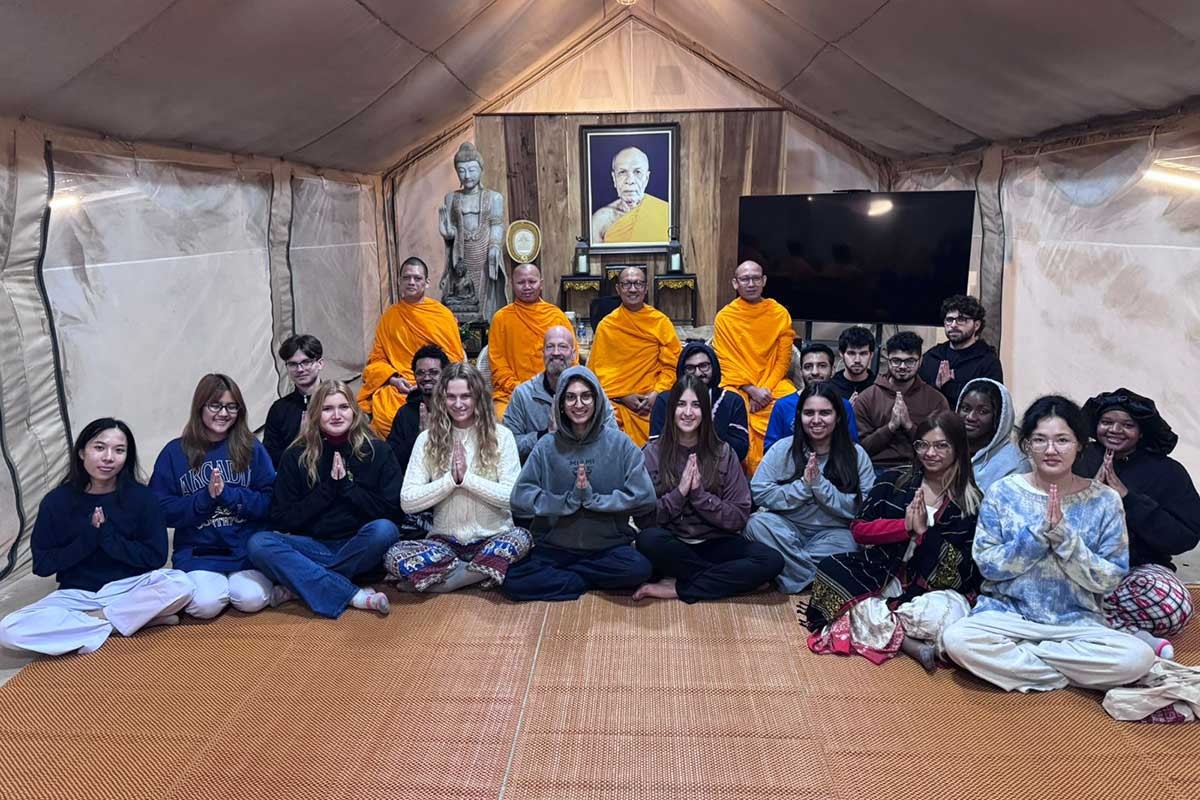
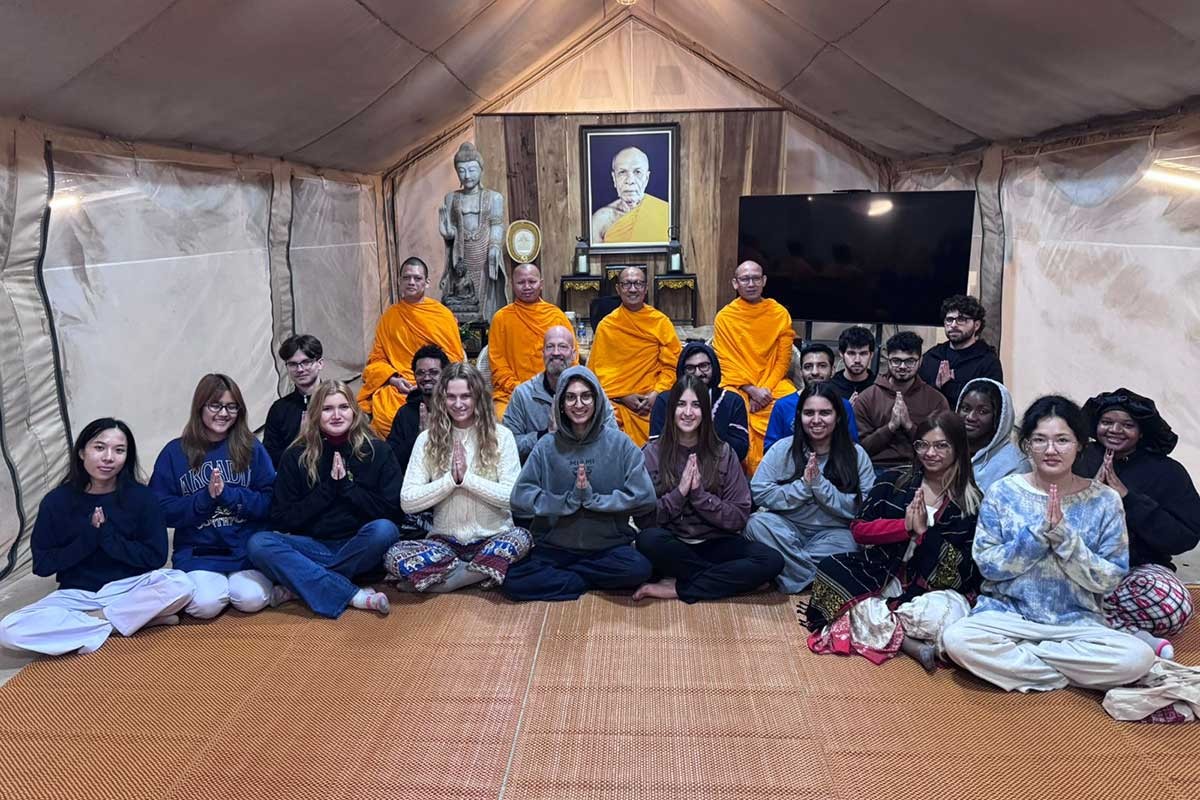
This course examines how mindfulness and meditation affect focus, mental health, and resilience. Blending neuroscience with contemplative practice, students measure brain activity in Bangkok and participate in a meditation retreat, exploring how insights from both science and lived experience can be applied to daily life.
- Arts for Transformation: The Case of Cambodia
CEO of Season of Cambodia, Phloeun Prim
Using Cambodia as a case study, students explore how arts and culture contribute to healing and reconciliation in post-conflict societies. Through site visits and engagement with local artists and cultural institutions, students gain insight into how artistic practice shapes social transformation and contemporary expression.
- From Rags to K-Pop: The Korean Human Resource Story
Assistant Professor of Social Research and Public Policy, Kangsan Lee; Program Head of Business, Organizations and Society, Sophia Jeung
Students trace South Korea’s transformation from post-war poverty to a global economic and cultural powerhouse by examining the role of people, policy, and culture. Immersive learning in Seoul includes site visits, guest lectures, and cultural analysis, helping students trace the development of human resource strategies to the global rise of K-pop.

