
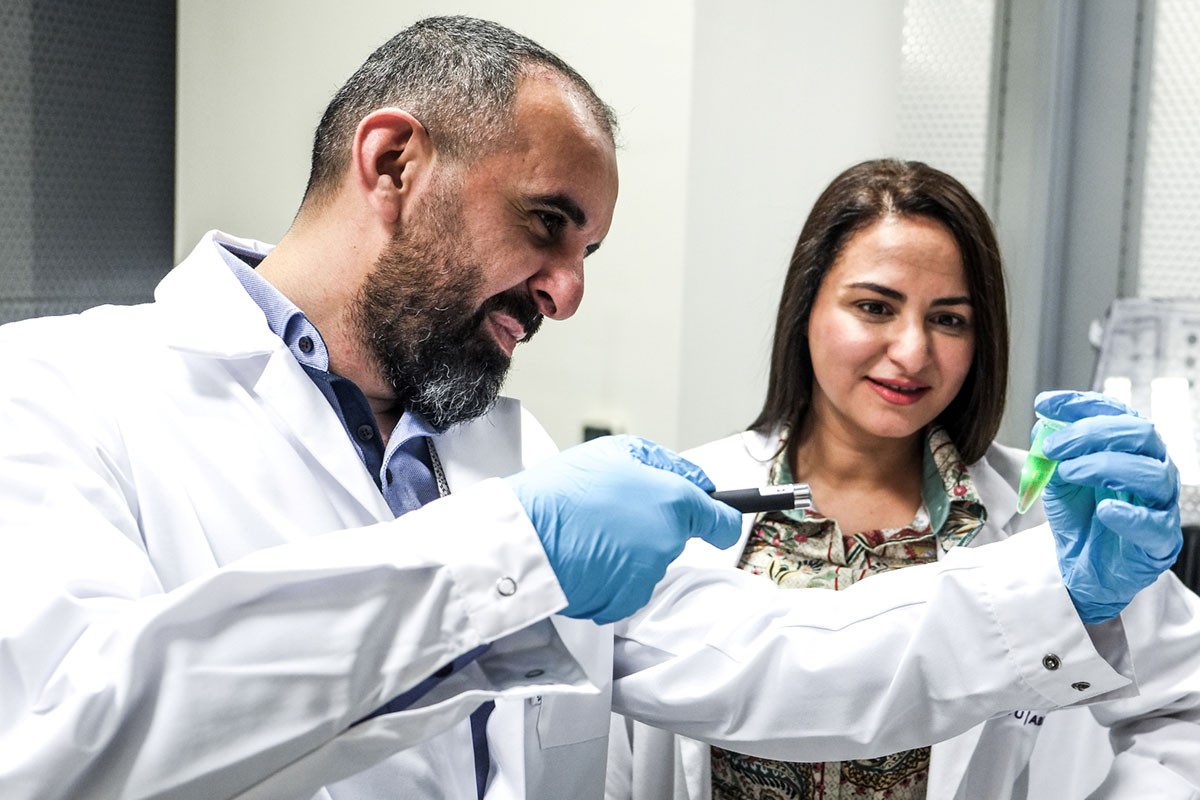

Researchers at NYU Abu Dhabi have developed smart molecules that can both detect and treat cancer, offering a safer and more precise approach to care.
The research, published in the Journal of the American Chemical Society, focuses on magnetic resonance imaging (MRI), a widely used tool that allows doctors to see tumors inside the body. While MRI agents are commonly used for diagnosis, they do not typically play a role in treatment. The NYU Abu Dhabi team designed molecules that combine both functions in a single system.
Unlike conventional drugs, which are small and relatively simple, these molecules have interlocked structures that resemble knots and rings. This design allows them to behave differently inside the body, improving both imaging and therapeutic performance.

The molecules are made from manganese and organic components. They remain inactive in healthy tissue but become active inside tumors, which are slightly more acidic. Once activated, they release manganese ions that enhance MRI contrast and trigger a therapeutic effect that damages cancer cells. The molecules were synthesized by Thirumurugan Prakasam, a research scientist in the Trabolsi Research Group at NYU Abu Dhabi.
Importantly, the researchers showed that these molecules can cross the blood-brain barrier and accumulate in glioblastoma tumors. This enables clear imaging of brain tumors, which are often difficult to detect and monitor with existing contrast agents.
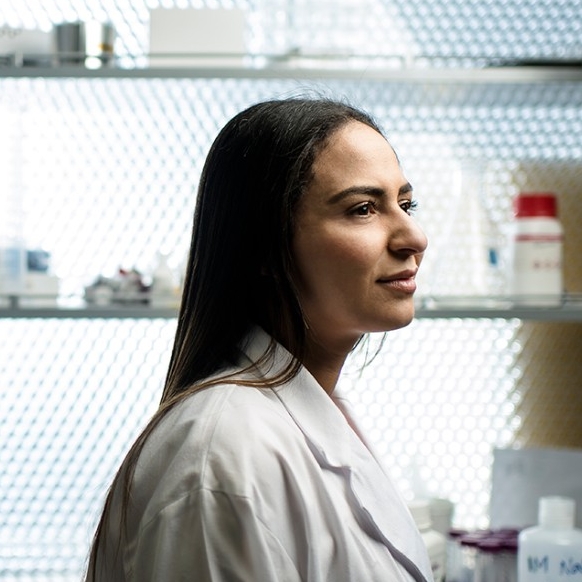
The technology was tested in aggressive glioblastoma tumors, one of the most challenging cancers to diagnose and treat. Achieving both clear imaging and a therapeutic effect in this model highlights the strength of this approach and its potential for clinical use.
The manganese-based compounds also offer a safer alternative to gadolinium, a metal commonly used in MRI contrast agents that can accumulate in the body and cause side effects in some patients.
The findings introduce a new generation of MRI agents that combine diagnosis and treatment in a single platform, with the potential to make cancer care faster, safer, and more precise.
This work was supported by the core technology platforms at NYU Abu Dhabi.


