Researchers at NYU Abu Dhabi have developed soft, flexible sensors that help restore a surgeon’s sense of touch during minimally invasive, or “keyhole,” surgery.
These procedures allow for faster recovery and less pain, but surgeons lose the ability to feel how much force they are applying through long instruments. This makes it harder to safely handle delicate tissue.

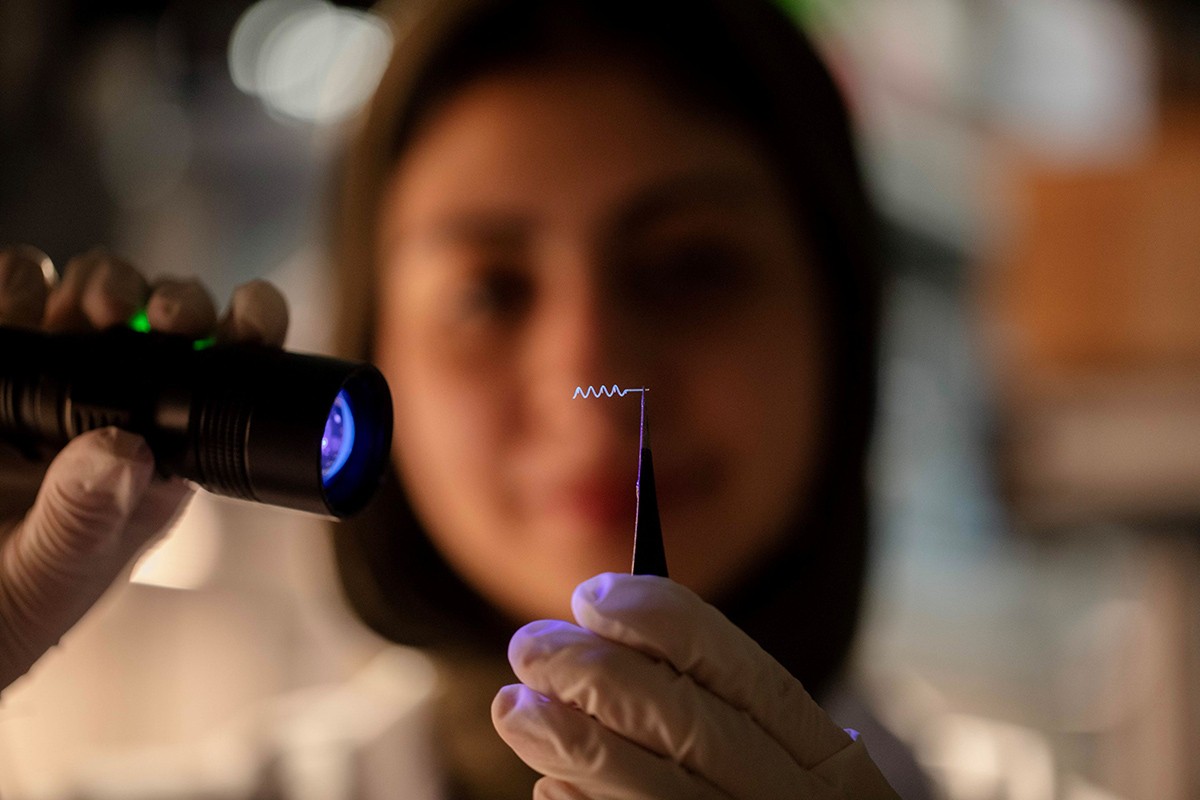
In this study, published in Microsystems & Nanoengineering, the team, led by NYU Abu Dhabi Associate Professor of Mechanical Engineering and Bioengineering Mohammad A. Qasaimeh, designed multichannel soft sensors that can measure a wide range of forces, from very light contact to stronger gripping, in real time. The sensors are made from soft silicone with tiny channels filled with liquid metal. When pressure is applied, the channels deform slightly, allowing the system to detect and measure force.
To demonstrate the technology, the researchers integrated the sensors into a laparoscopic grasper. One sensor was placed on the handle to measure the force applied by the surgeon, while another was placed on the tool’s jaw to measure how it interacts with tissue.

The study also shows how sensor design, including size and material, can be adjusted for different uses. The sensors can be placed on the handle to keep the tool tip clear and easy to sterilize, or directly on the jaw when precise measurement is needed.
Beyond surgery, this technology could be used in robotics, wearable devices, and other systems that require accurate force sensing.