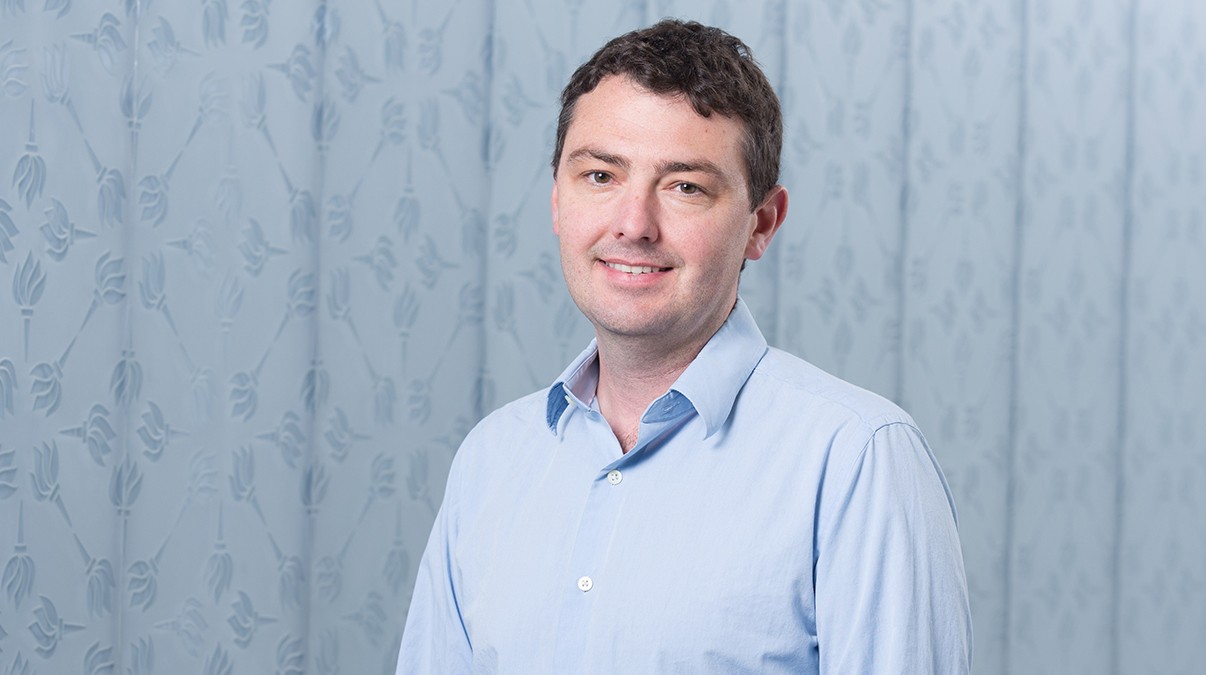

Francesco Arneodo
Research Area:
Astrophysics, Particle Physics
The research at NYUAD spans the full range of astrophysical phenomena including objects in our solar system, exoplanets, neutron stars and black holes within our own Galaxy, how matter falls into supermassive black holes in other galaxies, the formation and evolution of galaxies from the beginning of the Universe until the present day, and Dark Matter, which dominates the mass in the Universe.
Research Area:
Astrophysics, Particle Physics
Research Area:
Planetary Interiors; Atmospheric Dynamics
Research Area:
Supernovae; Stars; Pulsar Wind Nebulae
Research Area:
Dark Energy, Dark Matter, Galaxies, Black Holes
Research Area:
Black Holes; Neutron Stars
Research Area:
Particle Physics; Astronomy
An alliance of faculty and scholars actively involved in research in astronomy, astrophysics, planetary, and particle physics. Their goal is to work toward providing answers to a series of fundamental questions related to the composition and evolution of our universe.
Everything obeys the laws of physics, and biological systems are no exception. The complexity of biological systems, however, is compounded by the fact that the interactions have a wide range in spatial scales from a few atoms to global ecosystems, and life inherently functions far from the equilibrium. Biophysics research at NYUAD explores this complexity, asking questions that are both interesting and challenging.
Research Area:
Active Matter; Collective Behavior and Non-linear Dynamics in Living Systems; Cell Motility; Actin Dynamics; Micro-swimmers; Cilia-driven Fluid Flows and Propulsion
Research Area:
Biological Physics, Molecular Physics, Molecular Sensors, New Imaging Techniques
At NYUAD, we develop and use technology which exploits physics to determine the properties of cultural artifacts, including the chemical properties of artwork and pottery. We cooperate with museums and historical societies including the Louvre Abu Dhabi.
Ordinary matter constitutes less than a fifth of the total matter of the universe; the rest is in the form of dark matter. Identifying dark matter's nature and properties is among the most pressing pursuits in the particle physics community, creating a bridge between astrophysics and particle physics. Research at NYUAD is focusing on experimental dark matter detection and high energy physics.
Research Area: Astrophysics; Particle Physics
Research Area:
Planetary Interiors; Atmospheric Dynamics
Research Area:
High Energy Physics, Elementary Particle Phenomenology and Cosmology, Experimental High Energy Physics
Research Area:
Dark Energy, Dark Matter, Galaxies, Black Holes
Research Area:
Black Holes; Neutron Stars
Research Area:
Particle Physics; Astronomy