A molecule once dismissed as genetic “junk” could help scientists understand what drives some of the world’s most debilitating diseases.
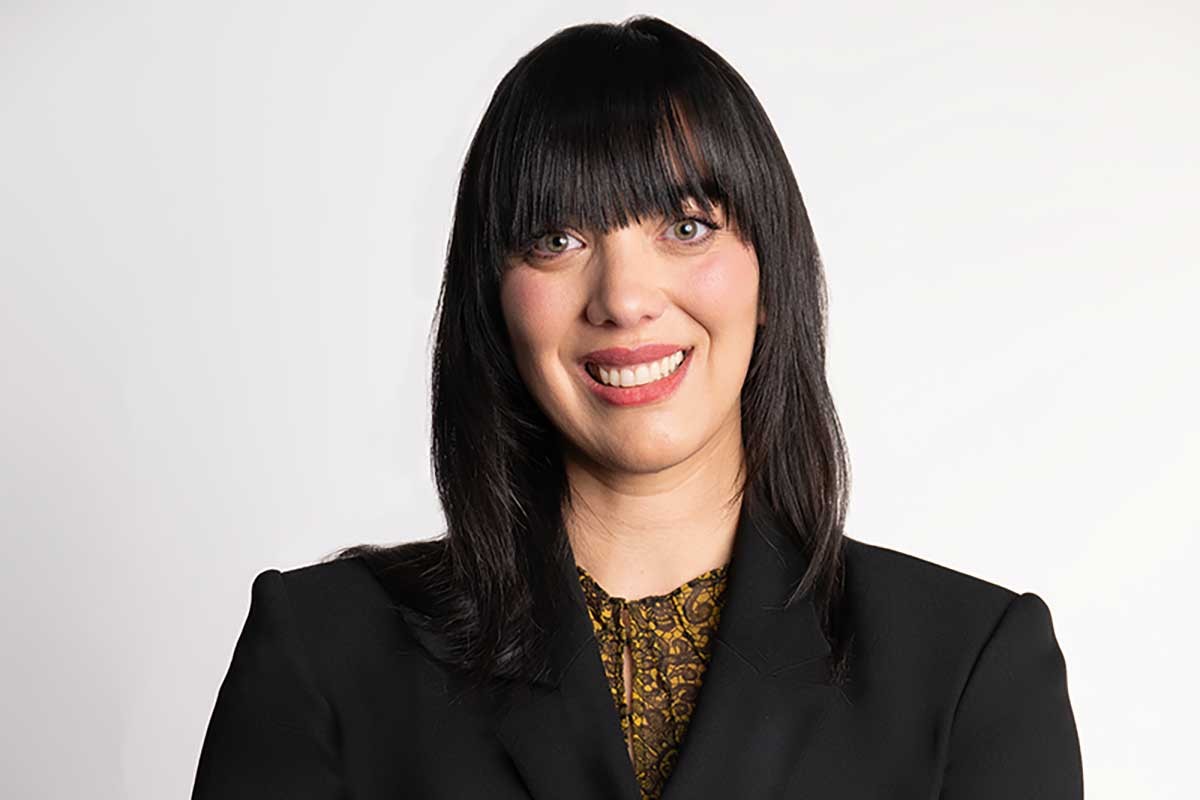
At NYU Abu Dhabi’s Percipalle Lab, associate research scientist Nadine Hosny El Said studies non-coding RNA, the stretches of genetic material that help control which genes switch on and off inside our cells.
Her work could eventually lead to better ways of detecting disease and pave the way for new treatments that address the underlying cause rather than just the symptoms.
For now, El Said and her colleagues are examining how these mechanisms work in cells grown in the lab, and what happens when they go wrong. For her, this is the crucial first step.
“I’m thinking more about how we can translate what we’re doing in the lab into real life,” El Said says. “The goal is to tackle disease at its biological roots rather than simply managing its effects, and ultimately have a clinical impact on patients.”
From Cairo to Abu Dhabi
El Said grew up in Cairo and studied pharmaceutical sciences before completing a master’s in biotechnology at The American University in Cairo.
After completing her doctorate at King Abdullah University of Science and Technology (KAUST) in Saudi Arabia, El Said joined the Percipalle Lab at NYUAD, drawn in by the quality of research in the region.
Her current work focuses on what happens around our DNA and how it influences the way genes behave. She uses identical twins to explain the concept. “If you think of twins having the same exact DNA, they can still develop different diseases,” she says. “That’s because of what we call the epigenome.”
The epigenome is the system surrounding our DNA that helps determine which genes are switched on or off without changing the DNA itself.
El Said describes it as an internal architect, opening or closing genomic regions like doors. Non-coding RNA is part of this system, helping regulate how genetic information is used.

Her research focuses on Maternally Expressed Gene 3 (MEG3), a type of non-coding RNA that was once dismissed as useless because it does not make proteins. El Said’s study found that MEG3 is involved in processes linked to osteoarthritis and other metabolic and neural disorders, such as diabetes and Alzheimer's disease, making it a potential target for future treatments.
Osteoarthritis currently has medicines that help manage its symptoms, but there is no cure for the underlying disease. El Said’s work aims to understand the drivers of these disorders and whether targeting MEG3 could offer a new approach.
The research is still at the laboratory stage, but El Said sees potential in targeting non-coding RNA. “There is a gap between the bench and the market, but there is huge potential,” she says. “By targeting non-coding RNA, we can develop medications for many disorders.”
Attention beyond the lab
Her work has already attracted significant international attention.
In 2025, El Said received the L’Oréal–UNESCO For Women in Science Middle East Award, recognizing her work in epigenetics and non-coding RNA.
It was especially meaningful after two previous unsuccessful entries, but the recognition did not end there. She was subsequently selected for UNESCO’s Virtual Science Museum, which documents the work and experiences of female scientists around the world, from Marie Curie and Ada Lovelace to researchers working today.
El Said was selected as the only representative from the Middle East, a distinction that placed her work alongside that of some of the most influential women in science.
“It was surprising and overwhelming,” she says. “I never imagined that my photo would be there alongside all these amazing female scientists.”

Turning discovery into impact
El Said’s research is now moving into new territory, with preliminary work exploring the relationship between cytoskeletal proteins, which help give cells their shape, and RNA.
But her ambitions extend beyond the next experiment. The recognition she has received has sharpened her focus on what happens after a discovery is made and how basic research can move toward clinical applications and, eventually, the market.
“Before the award, I was thinking of making the experiments work and getting results,” she says. “After it, I started thinking more about how this can be translated into real life.”
Her long-term goal is to lead her own laboratory as a principal investigator, building on the research she is doing now and helping move discoveries from the lab toward tangible impact. For El Said, the measure of success is ultimately whether that work reaches the people who need it.
“The road is never easy, and it’s never straightforward,” she says. “But with hard work, resilience, and humility, anything is possible.”