
Eduard Bahingayi
Research Associate
Affiliation: NYU Abu Dhabi
Education: PhD Seoul National University of Science and Technology
Research Websites: Communication Theory & Technologies (CT&T) Research Lab
Research Areas: Hybrid beamforming, FR3/mmWave, massive MIMO
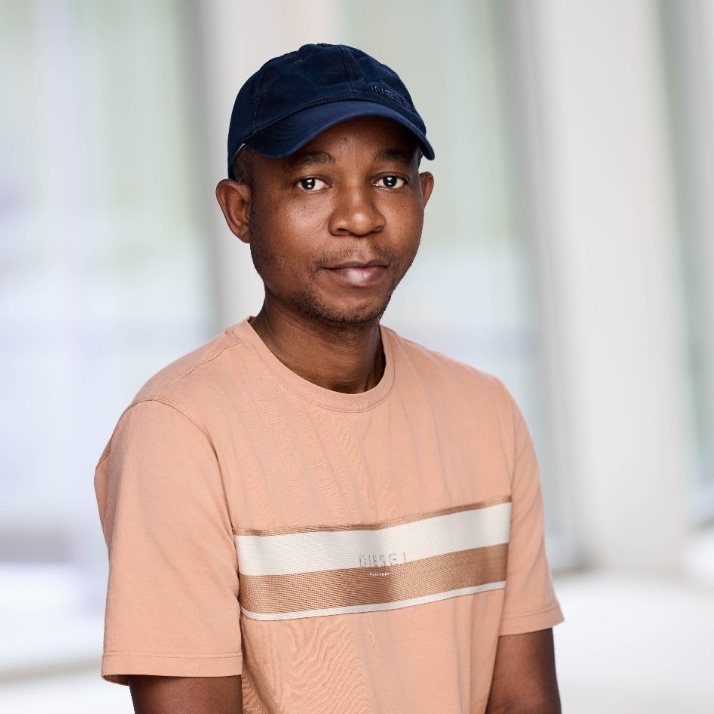

Eduard E. Bahingayi (Member, IEEE) received his PhD in Electronic Engineering from Seoul National University of Science and Technology, Korea, in 2020, his MSc in Telecommunication Engineering from the University of Dodoma, Tanzania, in 2013, and his BSc (Hons.) in Electronic Science and Communication from the University of Dar es Salaam, Tanzania, in 2010. He is currently a Research Associate in the Engineering Division at New York University Abu Dhabi.
Bahingayi's ongoing research focuses on the design and development of next-generation wireless communication systems, with emphasis on algorithms for hybrid analog–digital beamforming for mmWave and FR3 communication systems, near-field wireless communications, and intelligent surface-assisted architectures such as reconfigurable intelligent surfaces (RIS) and stacked intelligent metasurfaces (SIM). He has authored and co-authored publications in leading IEEE venues, including IEEE Transactions on Communications, IEEE Transactions on Wireless Communications, IEEE Transactions on Vehicular Technology, and the IEEE Wireless Communications and Networking Conference (WCNC).
Prior to joining NYUAD, Bahingayi held postdoctoral research positions at Seoul National University of Science and Technology and University College Dublin, and served as a Lecturer at the University of Dodoma. He is the recipient of the Best Paper Award at IEEE WCNC 2020 and the Best Paper Award at the 14th International Conference on ICT Convergence (ICTC) in 2023.
Summary of Research
Eduard E. Bahingayi’s research lies at the intersection of wireless communications and signal processing, focusing on the design of next-generation communication architectures for 6G and beyond. His work explores advanced transceiver and channel modeling techniques for millimeter-wave (mmWave) and FR3 (7–24 GHz) systems, emphasizing hybrid analog–digital beamforming and spatially adaptive transmission techniques.
He is particularly interested in the integration of reconfigurable intelligent surfaces (RIS) and stacked intelligent metasurfaces (SIM) to enhance spectral and energy efficiency in dense wireless networks. His research also addresses near-field communications, massive MIMO, and signal optimization algorithms for wireless communication systems.