


Climate Action Plan
NYU Abu Dhabi NYUAD is a large, energy-intensive university located on Saadiyat Island. As a comprehensive residential campus operating in a hot desert climate, energy use associated with buildings, cooling, and infrastructure represents a significant share of its environmental impact.
NYU Abu Dhabi is on a journey to minimize its environmental impact through a comprehensive Climate Action Plan that outlines how NYUAD is planning to achieve ambitious reductions in greenhouse gas (GHG) emissions.
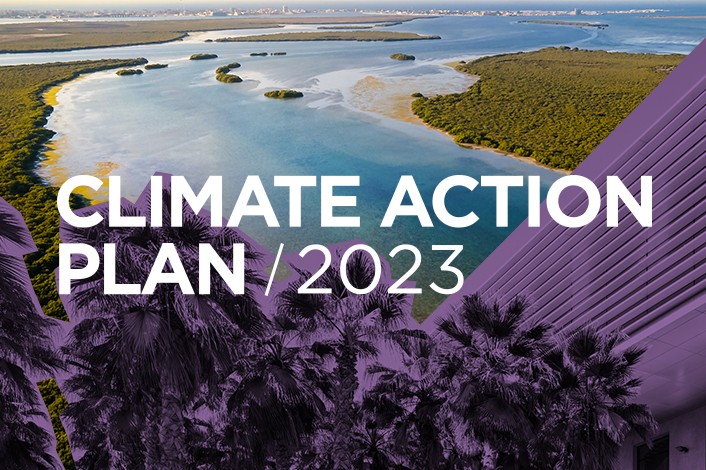
NYUAD's Goal — Carbon Neutrality by 2050
The University aims to achieve carbon neutrality by 2050, in alignment with the United Arab Emirates’ Net Zero by 2050 strategic vision and New York University’s broader carbon neutrality goals.
The Climate Action Plan provides a roadmap for achieving this target by focusing on emissions reductions that are technically, financially, and operationally feasible, while allowing for future advancements in technology, policy, and regulation.
The Approach
NYUAD’s approach to carbon reduction prioritizes:
- Reducing energy use in campus buildings
- Improving operational efficiency through retrofits, controls, and monitoring
- Supporting behavioural change to reduce demand
- Procurement optimization
- Aligning with a progressively cleaner electricity grid in Abu Dhabi
Where Do NYUAD's Emissions Come From?
NYUAD’s greenhouse gas inventory is developed in line with the GHG Protocol and NYU methodologies, using 2019 as the baseline year.
NYUAD’s carbon footprint includes:
- Scope 1: direct emissions from on-site fuel combustion, including natural gas, backup generators, and university vehicle fleets
- Scope 2: indirect emissions from purchased electricity and chilled water used in campus buildings
Scope 3 emissions, such as waste, are not currently included in the inventory, in alignment with NYU’s accounting approach.

NYUAD's Carbon Emisisons
Using the 2019 baseline, this chart captures direct emissions from natural gas, backup generators, fuel for vehicle use (Scope 1), purchased electricity, and chilled water (Scope 2).
How NYUAD Is Reducing Emissions
Carbon reductions at NYUAD are driven primarily by:
- Energy efficiency retrofits, including lighting, HVAC, and cooling systems
- Replacement of end-of-life equipment with more efficient alternatives
- Automation and optimisation through building management systems
- Procurement standards that prioritise energy efficiency
- Behavioural demand-side management initiatives
- Feasibility studies for on-site renewable energy generation
Managing Future Emissions
NYUAD’s Climate Action Plan prioritizes reducing emissions at source before considering other measures.
While the University is looking into future options such as carbon-free grid electricity, on-site generation, or clean energy certificates, our current strategy does not rely on carbon offsets or off-site renewable energy procurement. Instead, NYUAD focuses on direct energy reduction and alignment with a decarbonizing Abu Dhabi electricity grid